What Is Caketisserie? A Pâtisserie Chef's Approach to Cake Design
Sep 24, 2026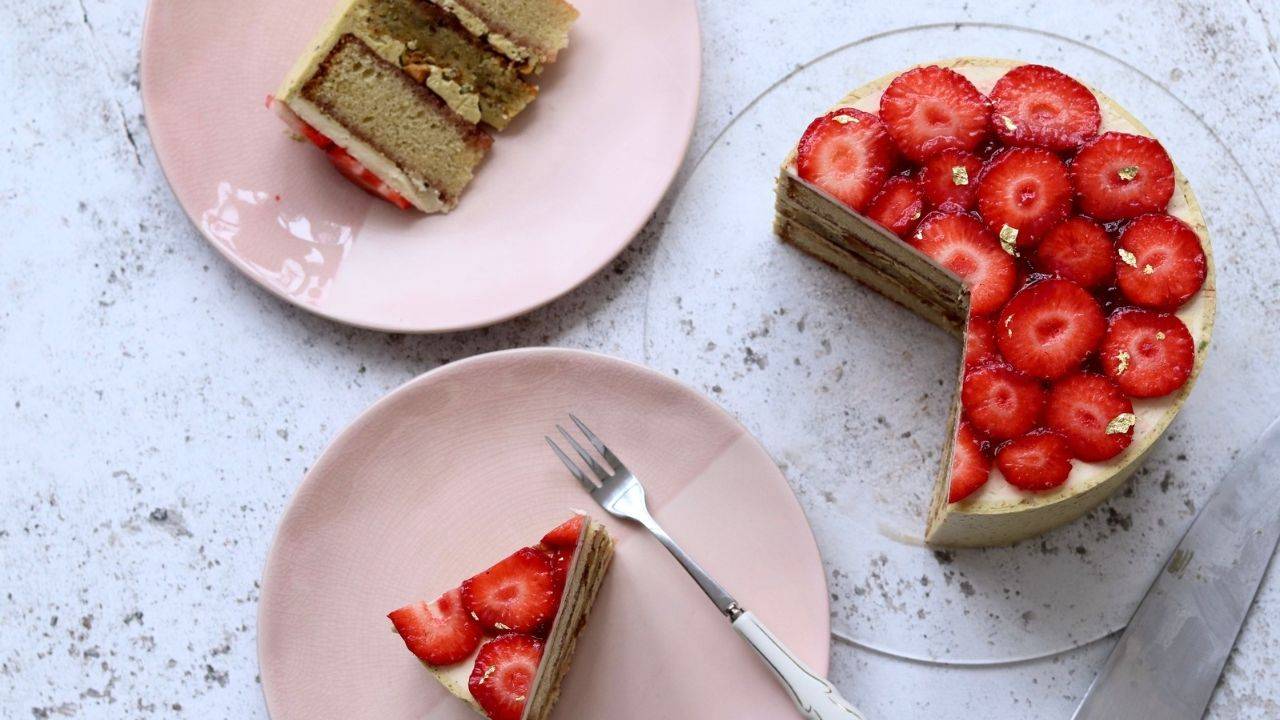
I've always strongly believed that a cake should taste as good as it looks. And I've noticed, too often, that in cake design taste tends to come second. There's a good reason for it: any cake (especially a tiered or wedding cake) has a lot to contend with. Hours out of the fridge, a long car journey for delivery, more hours on display before it's finally cut. All of which means cake designers think about stability first, and taste has to fit around that. Which is more than fair in all honesty.
But I think there's another layer of truth underneath. Cake designers, more often than not, are self-taught, and the recipes and techniques out there are fairly limited: we're talking sponge, and buttercream, and why not ganache (though usually that ganache is the same on the inside as the one used on the outside, which was itself developed for stability, not taste).
When I moved into cake design, I already had years as a patisserie chef behind me. And that gap became all I could see. And I became slightly obsessed with closing it.
So, what is Caketisserie?
Caketisserie is what you get when you bring the thinking of pâtisserie into cake design.
I trained as a pâtisserie chef in France back in 2010, before I ever made a wedding cake, and when you build desserts that way, everything comes down to two questions. How well do the flavours pair together? And how is the texture bringing it all together? That's honestly about it.
So when I stepped into cake design and kept seeing the same setup (gorgeous on the outside, slightly safe on the inside), I couldn't leave it alone. I started bringing the pâtisserie side in, one cake at a time. The biscuits, the inserts, the pralinés, the little bit of crunch. The way a good dessert gives you something different in every spoonful. Over the years those bits and pieces turned into a proper method, and the method got a name.
Caketisserie. Or, when I'm feeling playful, “the love child between pâtisserie and cake design” (although I have to credit my sister for that one).
A cake is a tasting experience, not a decorated structure
Cake design is a beautiful craft (in fact, I’m fully obsessed with wedding cakes). Many of the cakes coming out of the industry are genuinely stunning, technically sharp, often breathtaking. I'm not saying any of that is missing. But the last thing your customer remembers is what was on their plate. You might have had the most technically complex cake ever, if the inside is a disappointment to people eating it, that’s all it will be remembered for…
A cake is a tasting experience. Once that clicks, you start thinking about a cake as a sequence of bites, each one made of layers that interact, where the flavours have roles and the textures have jobs. Every choice (which sponge, which cream, what goes between them, what gives a bit of crunch) is a choice about what someone tastes when they put their fork in. And if you're charging premium prices, or you'd like to, every part of the cake has to earn it. Not just the finish.
That's the mindset. The rest is just a way of organising it so you can make those choices on purpose rather than by habit.
The Four Pillars, in a nutshell
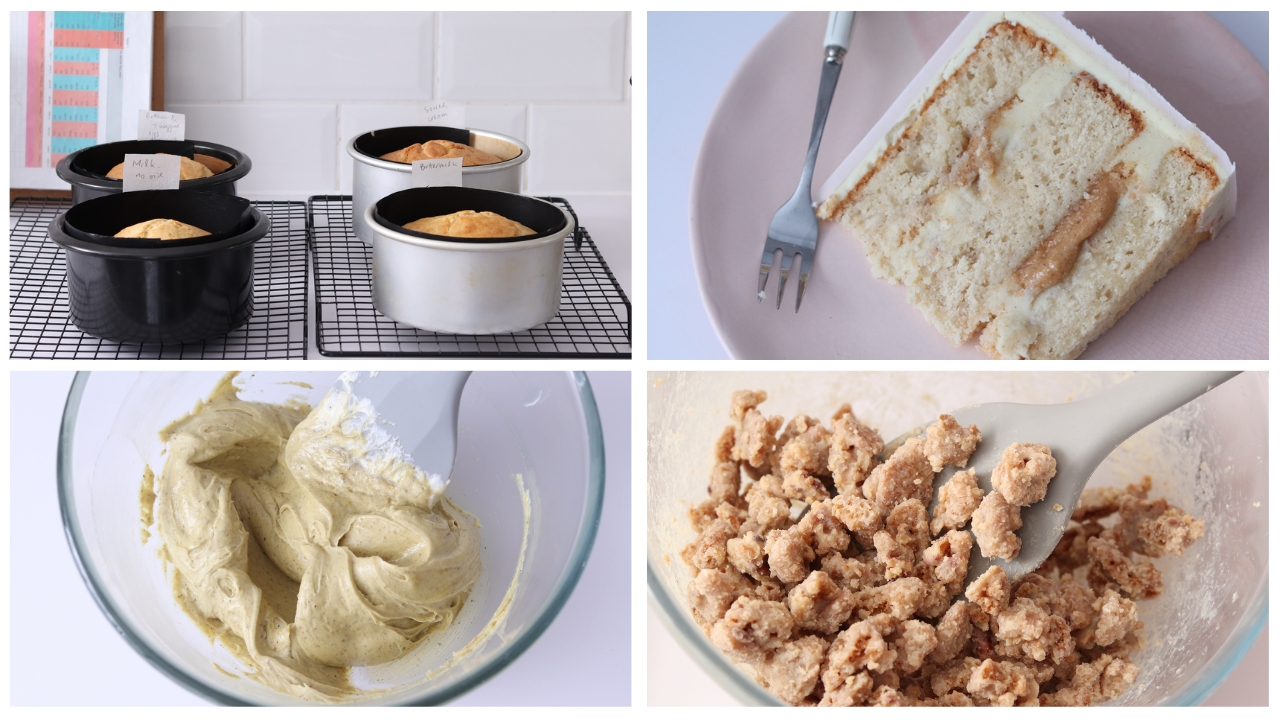
Caketisserie is built on four elements. Once you've got these four in your head, every cake becomes a series of decisions about what each one is doing and how they work together.
Sponge, the foundation. The base every layer sits on. It gives the cake its structure, but it's also a flavour carrier in its own right, whether that's a classic vanilla sponge or a pâtisserie biscuit like a Dacquoise. The mistake most people make is treating sponge as the part that "just has to be there." It isn't.
Cream, the binder. Buttercream, ganache, whipped ganache. It holds the cake together physically, and it's one of your main flavour vehicles. A well-flavoured cream can carry a whole cake on its own.
Insert, the surprise. This is where pâtisserie really shows its hand. A small, intentional layer of something else tucked between the sponge and the cream, a curd, a praliné, a fruit confit. It's the bit that makes someone pause at the first bite and think, oh, there's something else in here.
Crunch, the texture. The pillar everyone forgets, and the one that changes the eating experience the most. A crumble, a meringue disc, some roasted nuts. There's a pâtisserie principle I always come back to: a good dessert should be soft, creamy and crunchy, all three at once. Cakes tend to nail the soft and creamy and forget the crunch. We fix that.
Four pillars, four jobs. That's the skeleton of every Caketisserie cake.
Choosing flavours that actually work
Flavour pairing is my favourite part of the planning, and it's the part that can be overwhelming for a lot of cake makers. Too many options, very tempting to go overboard.
So there's a system. One rule sits above everything else: never more than three flavours in a single cake. I call it the Golden Rule. Go past three and the cake gets confusing, every flavour competing with the others, and instead of a clear experience the eater gets a bit of a muddle. And here's the important part: three is a ceiling, not a target. Some of the best cakes I've made use only two.
Within that, each flavour plays a role:
- The Hero. The flavour the cake is about. If a friend ate a slice and you asked them to describe it in one word, the Hero is the word that’d come out.
- The Secondary. The Hero's partner, there to add depth and round it out. Chocolate and hazelnut, strawberry and mint, pistachio and raspberry. It makes the Hero taste like the best version of itself.
- The Complementary. The contrast. A fresh, sharp or bright note that balances everything else, and often what separates a nice cake from one people actually remember.
And sometimes one flavour does two jobs at once. Take chocolate and raspberry, a classic flavour combo: the raspberry partners the chocolate and cuts through the richness all on its own. Which is exactly why chocolate and raspberry is perfect as a two-flavour cake, no third needed.
That's the thinking. Pick your Hero, add a Secondary that suits it, then ask one question: does this pairing already have its contrast, or is something missing? If it's missing, that's your Complementary.
Obviously, these "rules" aren't set in stone. But thinking this way helps you build your flavour-pairing muscle (as I love to call it). With practice, you'll start to know instinctively which flavours go together and which don't, without needing to label them at all.
What becomes possible once it clicks
This is the fun bit. Once you're thinking in pillars and roles, the same familiar ingredients start opening up. A few of mine, to give you a taste:
- Chestnut, hazelnut and blueberry (my Caketisserie version of the classic Mont-Blanc, all four pillars at full stretch, the blueberry a sharp little breath of fresh air against all that sweet, nutty richness)
- Dark chocolate, pecan and blackberry (the pecan working as both sponge and crunch, the blackberry a pop of contrast in the middle)
- Chocolate and peanut, lifted with pear (two rich flavours that needed a bit of freshness, and the pear brought it with a lovely coulis insert)
- Pistachio, Orange blossom and raspberry
- Coffee and banana
- Jasmine tea and dark chocolate (a match made in Heaven, honestly)
None of these are reinventions. They're familiar flavours, chosen on purpose and placed where each one does its best work. That last part (deciding which pillar carries which flavour) is what I call The Hosting Decision, and it's where a list of nice ideas becomes an actual cake.
Try it yourself
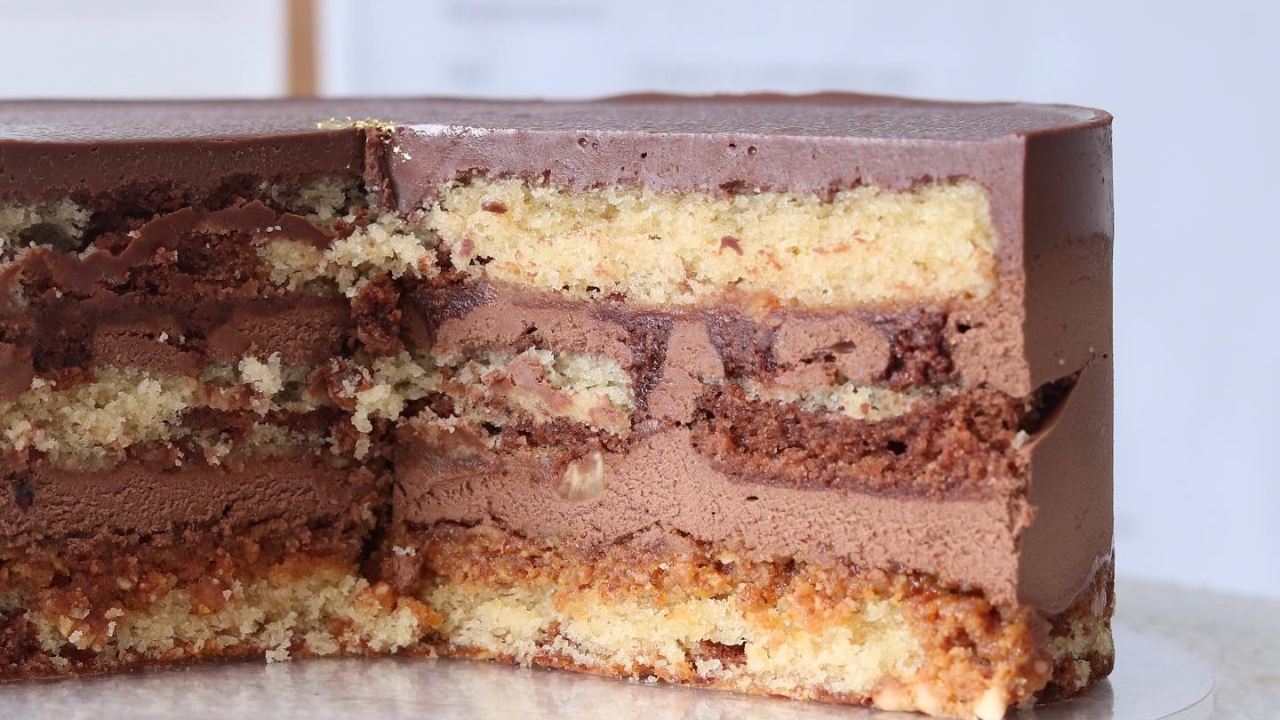
Want to see the whole thing running on one cake? Our Ferrero Rocher inspired cake is a nice place to start. Chocolate leading, hazelnut partnering, praliné doing the surprise in the middle, and a proper bit of crunch running through. Everything above, on a plate.
Have a read, bake it if you fancy, and you'll feel the difference the framework makes.
Where to go deeper: The Caketisserie Handbook
Everything here is the what and the why. If you want the how, the full method in one place, that lives in The Caketisserie Handbook.
It's the whole framework written down properly for the first time: the Four Pillars in full, the flavour-pairing process start to finish, my signature recipes (the sponge, the SMBC, the praliné, the crunch), and two complete cakes built step by step so you can watch every decision being made. No pâtisserie diploma required. Everything I teach, I've worked out in a home kitchen with no commercial equipment, because that's where I work too.
If the inside of your cakes has ever felt like it could be doing more, this is where you start.
Get The Caketisserie Handbook

FAQ
Do I need a pâtisserie background to try Caketisserie? Not at all. The whole framework was worked out in a home kitchen with no commercial equipment. You just need a way of thinking about cakes that goes a bit deeper than sponge, buttercream and decoration.
What are the Four Pillars of Caketisserie? Sponge, Cream, Insert and Crunch. Four elements, each with its own job, each bringing its own contribution to the bite.
Is Caketisserie only for wedding cakes? No. In fact, it was built with both wedding and celebration cakes in mind (long hours on display, deliveries, etc), so it holds up beautifully for those, but the thinking works for any cake where you want the inside to matter. If anything, due to their nature, celebration cakes have less constraints (they can be kept in the fridge longer, less hours on display, often there is no stacking involved) which works in our favour in terms of Caketisserie.
How many flavours should a cake have? Never more than three. That's the Golden Rule, and three is the maximum, not the goal. Two, expressed really well, will beat three that don't know why they're there.