Ferrero Rocher Inspired Cake: A Pâtisserie-Style Layer Cake Recipe
Feb 20, 2026
The Cake Challenge is back my friends! And it's back for good.
But Zaza... What is the Cake Challenge I hear you ask? Well my friend, the Cake Challenge is very simply YOU challenging ME to create a cake from a classic of patisserie and/or confectionery.
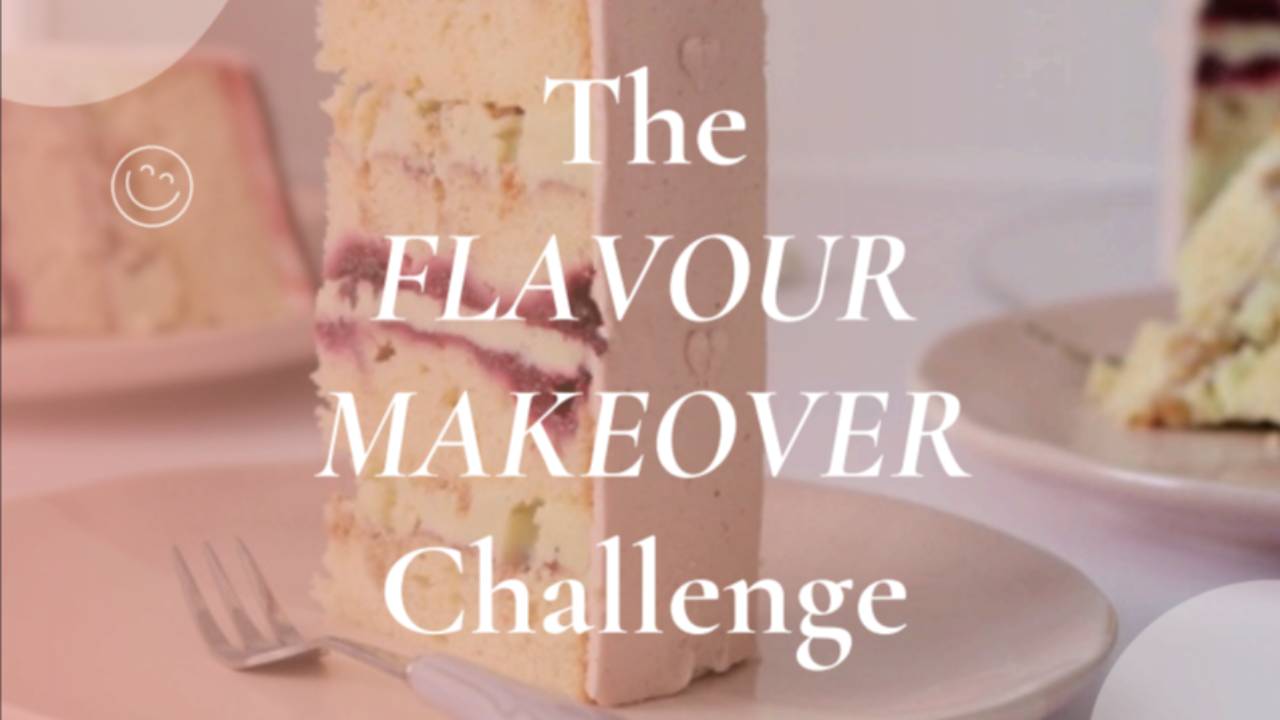
I create a poll on Instagram where I give you three options to choose from, and whichever flavour that gets picked most gets to be reinvented as a cake. And by cake, I mean layer cake, a cake that could be used as the base for a wedding or celebration cake.
In this instance, the choice was to be made between Pecan Pie, Bannoffee Pie and Ferrero Rocher. And let's just say that Ferrero Rocher won fair and square with 45% of votes.
So the choice was made: I had to start creating a Ferrero Rocher Cake recipe from scratch, and needless to say that I was thrilled as making one of these had been on the back of my mind for a little while now.
Inspired by Ferrero Rocher, this cake is assembled like a real pâtisserie gateau with all the recipe elements made separately from scratch and assembled like a layer cake in the end.
Here are all the elements you will find in it:
- A marbled Chocolate and Hazelnuts sponge to layer up - 3 discs were used here but you could easily double or triple to gain in height. I used Christina Tossi's vanilla sponge as the base (from her baking book "Momofuku Milk"), simply because I had been dreaming of trying it out and this was the perfect excuse. I had to adapt a few things to make it work with my own pantry so I'll be sharing the version I used instead of the book's.
- A whipped milk chocolate ganache in between layers.
- A Feuillantine and hazelnut Praliné Crunch layer to cover the first layer of sponge. The feuillantine is to reproduce the typical thin crunchy crêpe layer you can find in Ferrero Rocher.
- Homemade Nutella, because there can't be a Ferrero Rocher Cake recipe without Nutella, can it?
- A classic Dark Ganache to adorn the top of the cake.

The recipes
Difficulty level: moderate to difficult - making this cake requires some advanced skills.
CHOCOLATE & HAZELNUTS MARBLE SPONGE RECIPE
Makes 1 30x40 cm baking tray
INGREDIENTS
- Butter (room temp) 115g
- Light brown sugar 310g
- Eggs x3 medium
- Buttermilk 110g
- Vanilla extract 12g
- Grapeseed oil 75g (you can use sunflower alternatively)
- Self Raising flour 185g
- Sea Salt 4g
- Cocoa Powder 10g
- A large handful of Chopped Hazelnuts
METHOD
Cream the butter and sugar in your standing mixer with the paddle attachment for 2-3 minutes. Scrape down the sides. Add the eggs and mix again for another 2-3 minutes and scrape again.
On low speed, stream in slowly the buttermilk, oil and vanilla extract. Increase the speed of the mixer and mix on medium speed until the mixture has basically doubled in volume and becomes almost white. Scrape down the sides one more time.
On very low speed, add the flour and salt and mix until combined - no longer than that. Scrape down again and if there are any unmixed dry ingredients, mix one last time.
In a separate bowl, scoop out 315g of this mixture, and gently incorporate the (sieved!) cocoa powder. We'll use this mixture for the marble.
Oil or spray your baking tray and line it with baking paper.
Pour randomly the vanilla mixture, making sure to leave empty patches that we will fill with the chocolate mixture. Using a stick, draw circles (about half the width of the tray) to "link" the chocolate and vanilla batters, ensuring to keep the marble effect as you do so.
Sprinkle the whole batter with the chopped hazelnuts, making sure you have covered the whole surface.
Bake for about 30-35 minutes at 165ºC. After 30 minutes check the sponge by pressing gently your finger on one side and in the center (don't burn yourself!). If the batter is still a bit "wobbly", leave it for another few minutes until it bounces back slightly.
Leave the sponge on a cooling rack until fully cooled. It will be easier to remove the paper if the sponge is slightly cold so do not hesitate to put it in the fridge for 20-30 min before we start assembling.
HOME MADE FEUILLANTINE RECIPE
INGREDIENTS
- Butter (room temp) 57.5g
- Caster sugar 62.5g
- Plain Flour 62.5g
- Egg Whites 15g
- Vanilla 1/2 pod
- Salt - a pinch
METHOD
Mix the butter, sugar and vanilla on the bowl of your standing mixer with the paddle attachment. Scrape the sides and add the flour and salt. Scrape again and add the egg whites.
Using a silicone mat (or reusable non-stick baking parchment), spread your batter really thinly while covering the whole surface (you should get 2-3 trays).
Bake at 200ºC for 5-8 minutes. I advise turning the trays around halfway through for an even baking. When you have a deep golden colour all over you're ready to take the trays out of the oven. Leave to cool fully.
When fully cooled, you'll be left with a really thin and crispy biscuit. You can then break it down in chunks and keep it in airtight containers. They will tend to get a bit soggy after a while so it's best to use them as soon as possible. They will stay crunchy in fat-base masses, so perfect for what we'll be doing!
HAZELNUTS & ALMONDS PRALINE RECIPE
INGREDIENTS
- Whole blanched Hazelnuts 100g
- Whole Almonds (blanched or with skin) 100g
- Caster Sugar 200g
- Water 50g
- Glucose syrup (optional) 1tbs
METHOD
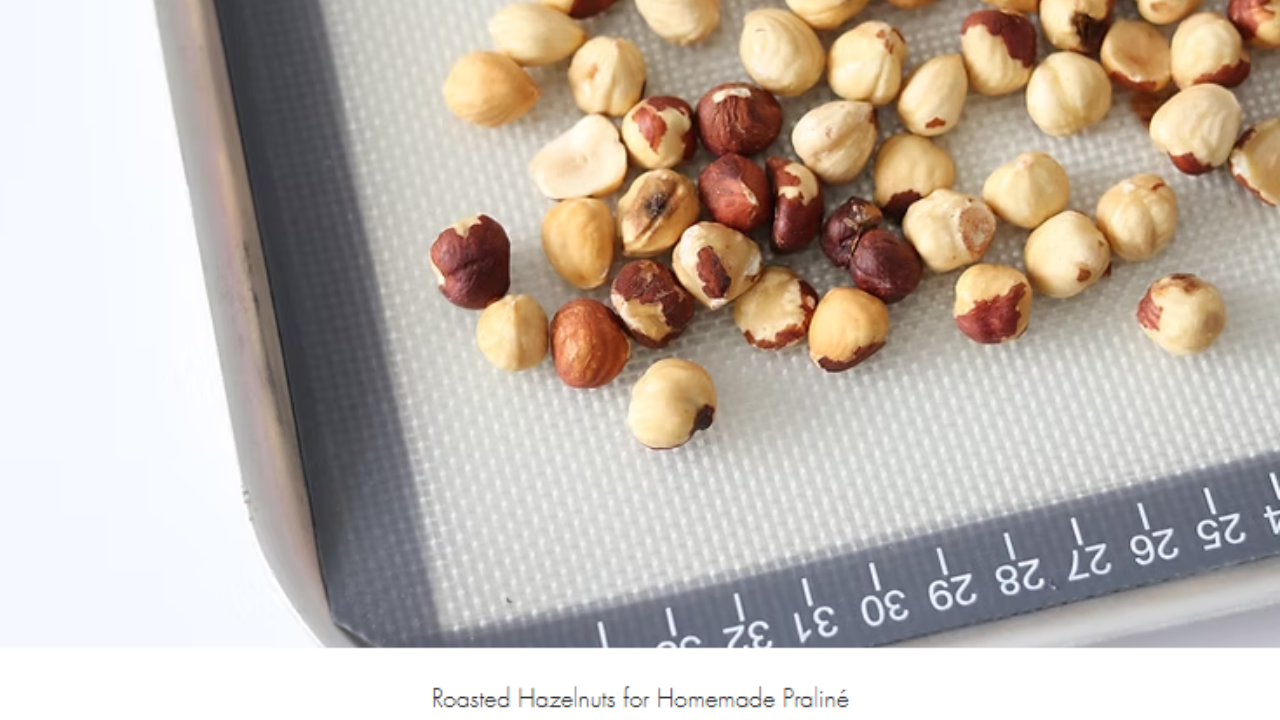
Roast the Hazelnuts and Almonds on a tray in the oven at 170ºC for about 10-15 min or until lightly golden. Leave to cool.
Make the caramel: place in a perfectly clean saucepan the water and sugar. Stir gently while still cold to ensure the sugar is evenly spread in your pan - this will make it easier to caramelise evenly.
Place on medium heat and when it starts boiling everywhere add the glucose syrup.
Pro-tip: at this stage, place a cover on the saucepan for 10-20 seconds. This will create enough steam which in turn will "clean" the sides of your pan, avoiding the re-crystallisation of the sugar.
Increase the heat slightly (medium-high) and stay close to your saucepan as, as soon as the caramel starts looking a nice golden brown everywhere, you have to immediately pour it onto a tray lined with silicone or baking paper. Leave to cool fully.
When nuts and caramel have fully cooled, Break the caramel "Slab" into pieces and place it with the nuts in a food processor bowl and start blending.
You will go through different stages and it will seem that it stays in a powdery state for quite a while which is normal. Do not hesitate to stop and scrape the sides of the blender and resume blending until reaching a lovely runny praliné paste consistency.
Pour into a jar or an airtight container. This will keep for 6-7 months quite easily if stored in a cool place and kept in airtight containers (not that it will survive that long since you are most likely going to eat with a spoon anything left from this recipe!).
PRALINE FEUILLANTINE RECIPE
INGREDIENTS
- Hazelnuts & Almonds Praliné 100g
- Feuillantine 50g
METHOD
Once fully cooled, break the Feuillantine into flakes: place them into a bowl and using a pestle (or the end of a rolling pin!) crush the biscuits.
Mix with the praliné with a silicon spatula (for ease) and set aside.
HOMEMADE NUTELLA RECIPE
INGREDIENTS
- Hazelnuts & Almonds Praliné 150g
- Grapeseed Oil (Alternatively you can use Sunflower) 5g
- 1/2 Vanilla Pod or 1 tsp Vanilla Bean Paste
- Pinch of Sea Salt
- Cocoa Powder 12g
METHOD
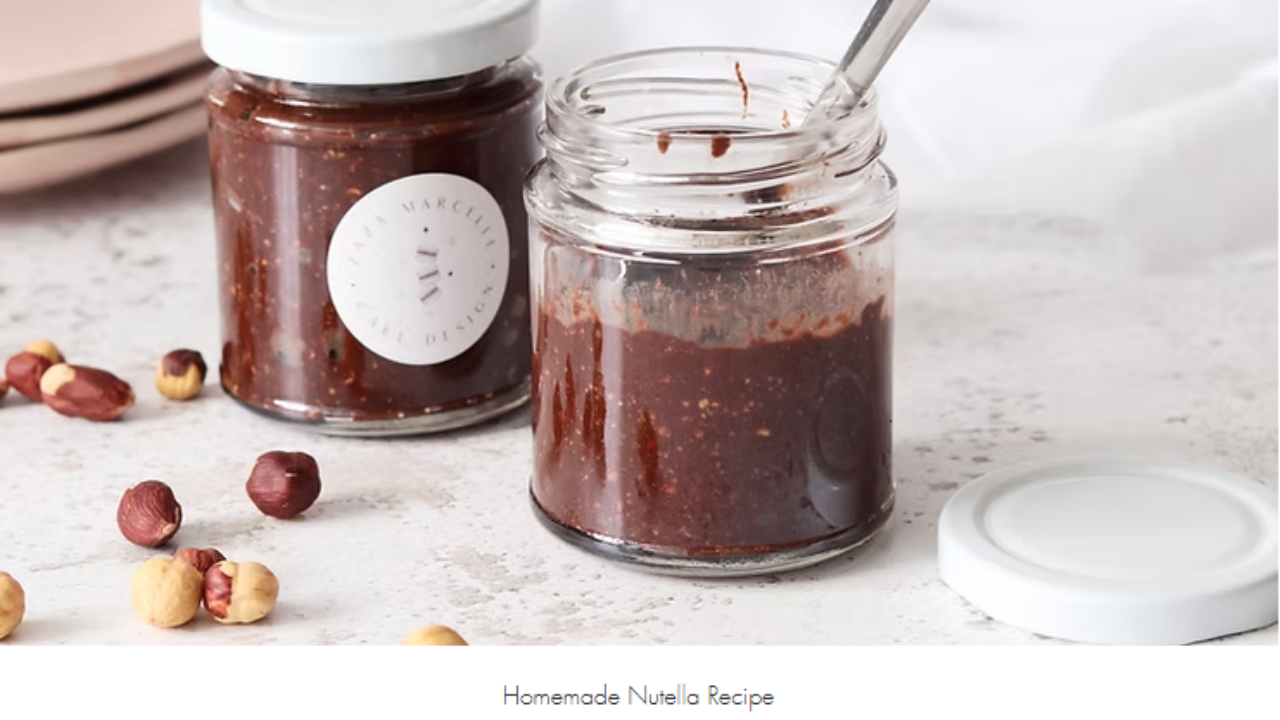
In the food blender, mix all ingredients together until fully homogenised. Set aside. Pour any leftovers in jars after assembling the cake and enjoy breakfast on warm toast (just making suggestions here...). This Homemade Nutella recipe will keep for 5-6 months.
WHIPPED CHOCOLATE GANACHE RECIPE
INGREDIENTS
- Dark chocolate 150g
- Whipping Cream 300g
- 1/2 Vanilla Pod or 1 heaped tsp of vanilla bean paste
- A pinch of salt
METHOD
The day before:
Melt the chocolate (bain-marie or microwave) and simmer half of the cream with the vanilla on low heat.
Pour the hot cream onto the chocolate and add a pinch of salt. Mix with a stick blender to create a perfect emulsion. Scrape the sides of the bowl thoroughly and blend one more time.
Add the other half of the cream (cold) and blend one last time to perfect the emulsion.
Note: if you do not have a stick blender, you can use a whisk. However, I ALWAYS recommend using a stick blender to finish a ganache to perfect the emulsion and make it more stable. If you want to know more about ganache check my online course right here :).
Cover the ganache with cling film (press directly in contact with the surface to avoid crusting) and leave in the fridge - ideally overnight, or at least 6 hours.
CLASSIC DECOR GANACHE RECIPE
This ganache will be used to cover the top of the cake so ideally you'll want to make it when your cake is assembled and ready to be finished as you will get the best result when pouring it fresh: it will be perfectly levelled as still a bit "liquid".
INGREDIENTS
- 70% Dark Couverture 100g
- Whipping Cream 100g
- 1/4 vanilla pod or 1/2 tsp of vanilla bean paste
METHOD
Melt the chocolate in a pouring jug in the microwave. Bring the cream to a simmer. Pour the cream onto the chocolate and blend with a stick blender to create a perfect emulsion. Scrape the sides and blend one last time.
Use straight away as described in the assembling process below.
AND NOW... LET'S ASSEMBLE THE CAKE
To watch the short video I made on assembling the cake click here!
Line a 6" cake ring with acetate roll - I use an adjustable cake ring similar to this - and place it on a silicone mat (this will help it stay in place as you work).
Remove the baking parchment/silicone mat from the sponge and cut 3x discs from the sponge. If you do not have a spare ring to cut, use the same ring you'll be using for the assembling.
Note: You will be able to cut 2 whole discs and the 3rd will have to be a couple of half discs cut from the leftovers that you'll assemble to make one. Keep it for the bottom or middle layer.
Whip the ganache by placing it in the bowl of your mixer with the whisk attachment. Whisk on medium speed until reaching the right consistency: it should be slightly stiff but stiffly shiny. If you over whip it it will have a mousse and mat consistency and it will be harder to work with. Fill a piping bag with the ganache with a plain nozzle (size 10).
Place the first layer of sponge at the bottom of the ring.
Place the whole content of the Praliné Feuillantine and spread it as evenly and flat as you can (I have a very handy stainless steel disc with a handle, but you can use the back of a spoon!).
Pipe the ganache evenly and place the second layer of sponge (this is a good time to play Tetris and add your two halves to make one disc).
Pipe the ganache again, making sure to leave about 1cm of empty space between each circle. Then fill those gaps with the Homemade Nutella (using a piping bag with no nozzle).
Place the last layer of sponge and press gently to make it as flat and levelled as you can.
Make the decorating ganache now and pour it while still fresh and liquid onto the top of the cake.
Place the cake in the fridge overnight.
The next day, remove the ring, and gently peel off the acetate, or leave it on as you please (in which case, I suggest you place a logo sticker if you have one to seal the acetate neatly and on brand!
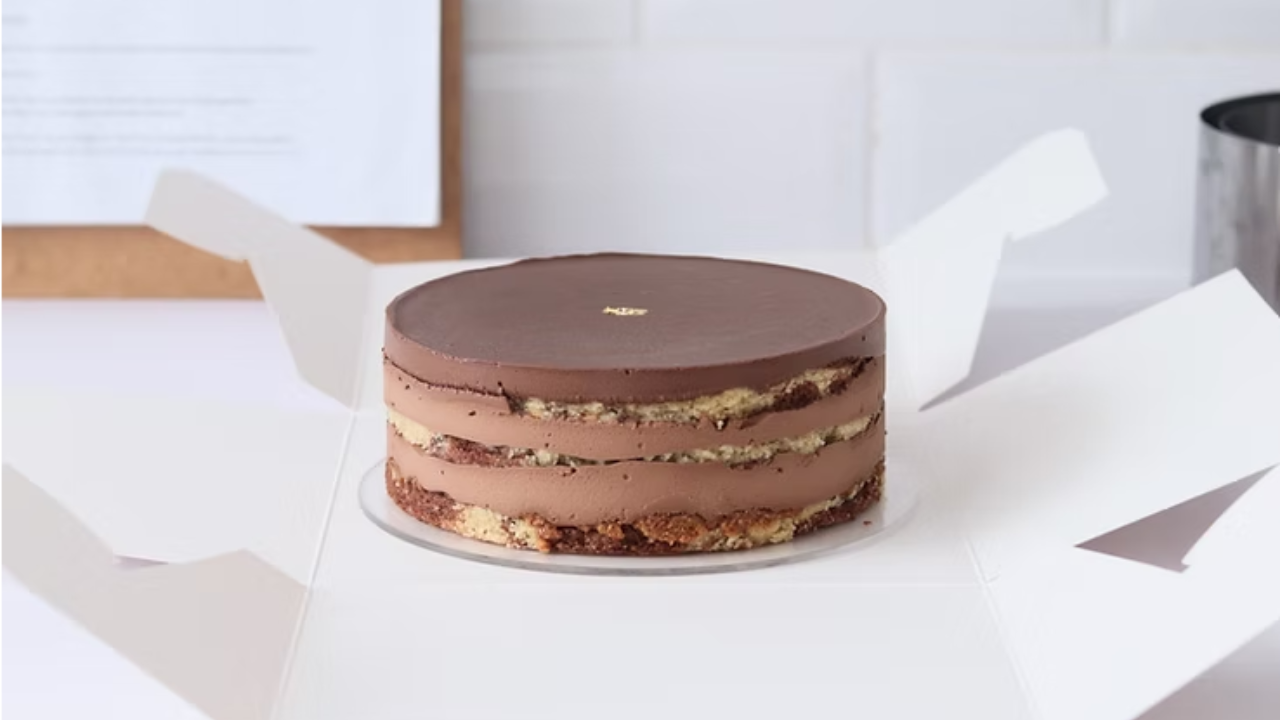
As the sides are showing I wanted to keep the top of the cake quite simple because it doesn't need much more (in my humble opinion) so I decorated it with a touch of gold leaf in the center.
And voilà! Your cake is ready to be devoured.
Any leftovers will be kept for 7 days well kept in the fridge in an airtight container to avoid drying out.
This cake (as most cakes!) will taste its absolute best at room temperature (always avoid eating a cake cold out of the fridge as the taste gets tuned down by the cold and the textures feel harder and dryer).
If you make this cake in your own kitchen, make sure to tag me on socials (Instagram is where I hang out) @zazamarcelle! Nothing would make me happier than to see your own version of it.
Where to go deeper: The Caketisserie Handbook
Everything here is the what and the why. If you want the how, the full method in one place, that lives in The Caketisserie Handbook.
It's the whole framework written down properly for the first time: the Four Pillars in full, the flavour-pairing process start to finish, my signature recipes (the sponge, the SMBC, the praliné, the crunch), and two complete cakes built step by step so you can watch every decision being made. No pâtisserie diploma required. Everything I teach, I've worked out in a home kitchen with no commercial equipment, because that's where I work too.
If the inside of your cakes has ever felt like it could be doing more, this is where you start.